
Live Event Coverage: What Organisers Ask Us Before Booking Cameras
6 min read
The questions we hear most from organisers planning a multi-camera event, answered plainly: how many cameras, what a switched feed involves, and what we need from the venue.
How many cameras does my event actually need?
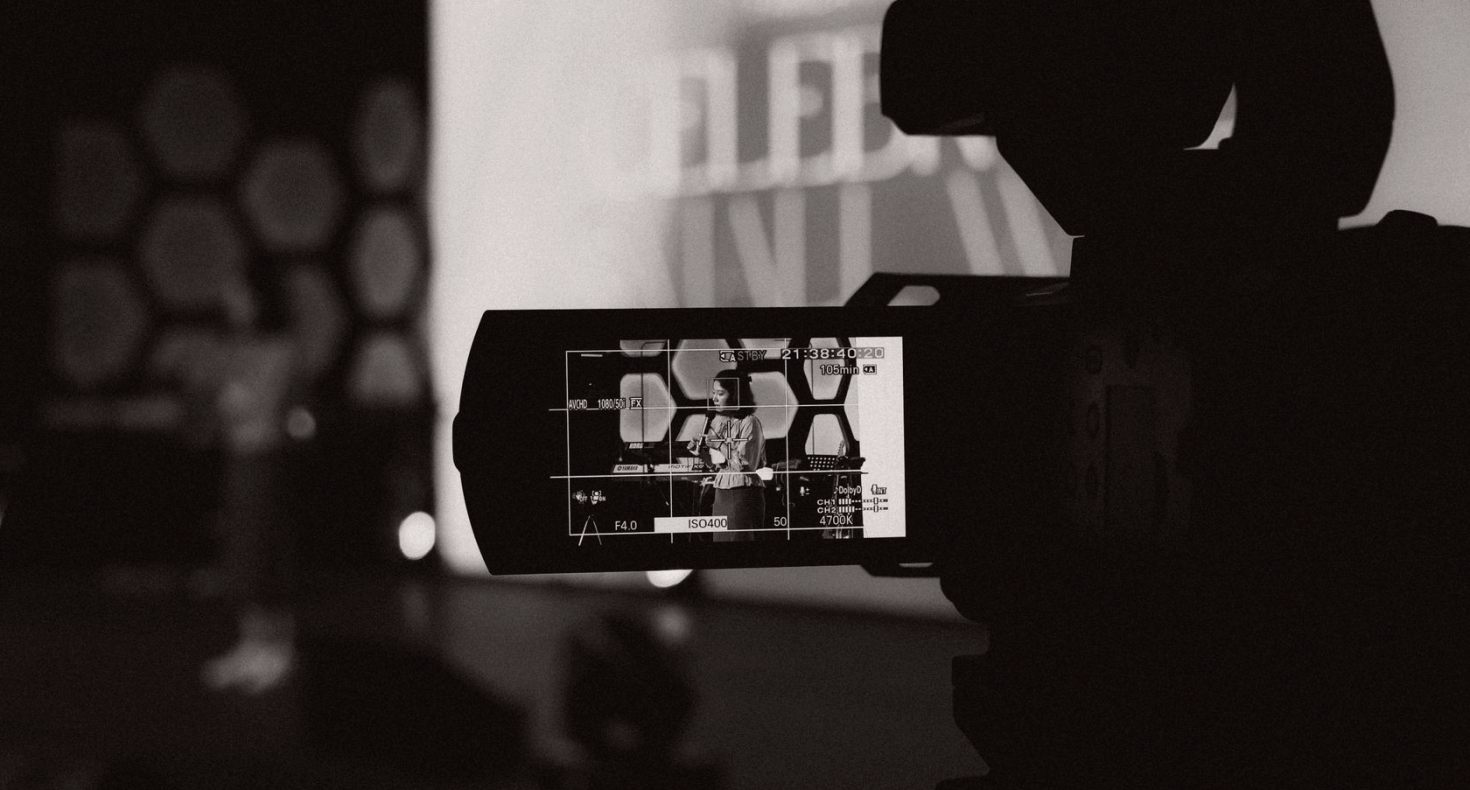
This is the question that arrives first, and the honest answer depends on what the audience at home or in the overflow room is meant to see. A single speaker at a lectern can be covered well by two cameras: one wide, one tight. A panel with four people usually wants three, so that a reaction shot is always available without cutting back to the wide.
Concerts and community performances behave differently. There the camera count follows the stage, not the number of people on it. A choir on risers, a band with a drummer set back, a dance piece that moves across the full width: each of these asks for a different arrangement of positions, and we would rather walk the room with you than quote from a table.
We start by asking what the footage is for. A live stream for members, a recording for the archive and a screen feed for the back of the hall each tolerate different compromises.
What does live switching mean in practice?
Live switching means a vision mixer operator cuts between the cameras as the event happens, so that what leaves the building is already a finished programme. There is no editing afterwards for the live feed. If the operator picks the wrong shot, the audience sees it, which is why the person at the desk matters as much as the equipment.
Before doors open we agree a running order with the organiser and mark it against the camera positions. Who speaks from where, when slides appear, when a video plays in from a laptop. The operator works from that sheet, and a camera operator is told in advance which shots they are expected to hold.
We also record each camera separately where the setup allows, so that a clean edit can be made later if you want a shorter highlights version.
Can you stream the event online as well?
Yes, streaming output is part of how we plan live coverage, and it is worth deciding early because it changes what we ask of the venue. A stream needs a dependable upstream internet connection, and venue wifi shared with a hundred delegates is rarely it.
We ask for the upload speed the venue can guarantee and, where possible, a wired connection to a socket near our position. If the connection cannot be confirmed in advance, we say so in writing and discuss a fallback, such as a recording with later upload, rather than promise a stream we cannot protect.
Audio for the stream is mixed separately from what the room hears. A hall that sounds right in person often sounds distant or boomy through a feed, so Owen or a colleague keeps a dedicated mix for the online audience and listens on headphones throughout.
What do you need from the venue and from us?
A site visit, ideally, or failing that photographs and a floor plan. We want to know where power is, where the cable runs could cross walkways, how high the ceiling is and whether the lighting can be dimmed or fixed. These details decide camera positions more than any preference of ours.
From the organiser we need the running order, the names and roles of the speakers or performers, and a named person who can make decisions on the day. Many delays at a live event come from nobody being sure who can approve a change to the schedule.
Access matters in late autumn too, when load-in often happens in the dark and in the wet. Tell us about loading doors, parking and any restrictions on when we can set up, so the crew arrives with time to spare for a rehearsal.
How long does setup and rehearsal take?
For a conference in a single room with three cameras, we usually plan the better part of a morning for setup, cabling and checks, then a short run-through with whoever speaks first. Larger venues, longer cable runs or a stage with its own lighting rig take longer, and we state the time we need when we quote.
The rehearsal is not a formality. It is when camera operators learn where the speaker actually stands rather than where the plan said they would, and when the audio engineer hears the room full of equipment but empty of people. A room changes its sound once the audience arrives, and we allow for that.
If your schedule only allows setup shortly before doors, tell us at the start. We can adjust the number of positions or simplify the signal path so that the essentials are tested properly.
What happens if something goes wrong during the event?
Something small usually does: a radio microphone battery, a laptop that will not output to the screen, a cable kicked loose. Planning for live work is mostly planning for those moments, so key signal paths have a spare and radio microphones come with fresh batteries at the break.
The crew communicates over intercom, which means a camera operator can report a problem to the switching desk without anyone in the room noticing. If a camera fails, the operator at the desk already knows which other shot can stand in while it is replaced.
We would rather tell you before the event which parts are single points of failure and what we have done about each one. That conversation is part of how we plan workflow, and it tends to be short and reassuring when the groundwork has been done.
Most of what organisers ask us comes down to three things: what the audience should see, what the venue allows, and who decides on the day. Answer those and the camera count, the switching and the streaming follow naturally. If you are planning a conference, concert or community event, send us the date, the venue and a rough running order through the contact page, and we will reply with questions of our own and a written quotation.