
Six Audio Mistakes That Cost Clarity on Air and in the Room
6 min read
Most audio problems are planned in long before the first rehearsal. These are the microphone, mixing and monitoring mistakes I see most often, and the habits that prevent them.
Choosing microphones by habit instead of by voice
The most common mistake starts before anyone plugs in a cable: a microphone is picked because it is what the cupboard holds, not because it suits the speaker. A soft-spoken presenter and a loud panellist sitting a metre apart need different handling, and a single choice for both usually means one of them sounds thin or the other overloads the channel.
Walk the set first. Note who speaks, how close they will sit, whether they move, and what is behind them. A lavalier suits a presenter who walks and gestures, while a handheld or a boom is often kinder to a guest who stays seated. Clothing matters too, because rustling fabric and chunky jewellery will travel straight into a lavalier.
Test with the actual person speaking at their normal level, not a technician saying one, two. Voices change with nerves, so ask for a few lines of real script and listen again once the guest has relaxed.
Ignoring the room until the mix sounds wrong
Hard walls, glass and bare floors return sound a fraction of a second late, and a microphone will pick up every bit of it. Teams often try to fix this at the desk with equalisation, which only trades one problem for another. The cure belongs in the room, and it is usually cheaper than expected.
Soft furnishings, heavy curtains, a rug under the interview chairs or a few acoustic panels out of shot can tame a lively space. Moving a microphone closer to the speaker does more than any filter, because it raises the voice relative to the room.
Listen to the space with the lights and cameras running as well. Lighting rigs, fans and monitors all add noise that was not there during the quiet walk-through, and they are far easier to deal with before transmission than during it.
Setting levels once and trusting them
A level that looks fine at rehearsal rarely holds for a live show. Speakers lean in when they get animated, laugh into a microphone or fall quiet when they are reading. If the gain is set once and left, the loudest moment clips and the quietest disappears under the room.
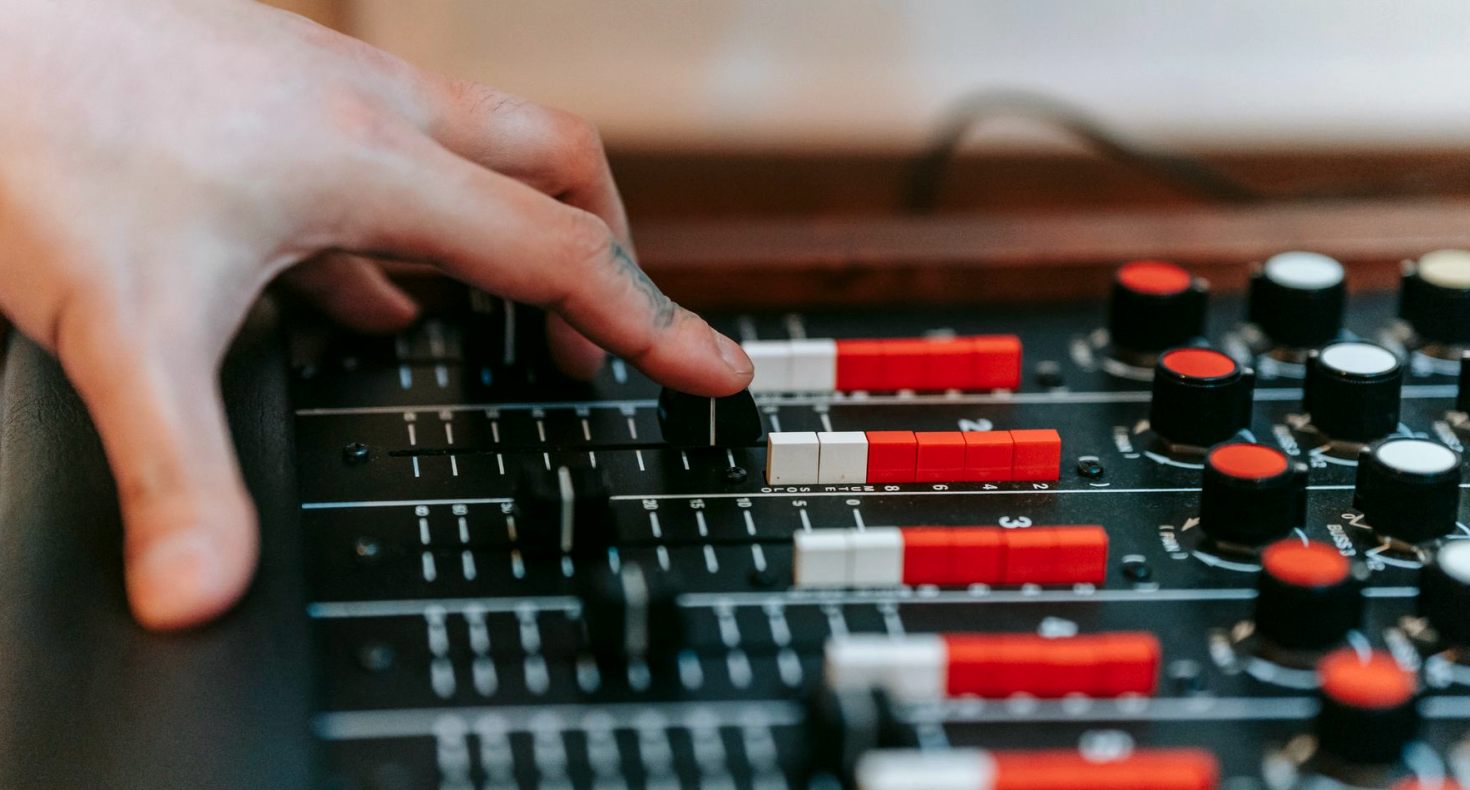
Leave headroom on every channel, so a sudden shout does not distort, and keep a hand on the faders during the show. Riding levels gently is a routine part of the job, not a sign that something is wrong.
Agree a reference level with the vision and streaming teams as well. When the programme is sent out, the audio should reach the next stage at a consistent, known level, so nobody downstream has to guess and correct it by ear.
Monitoring on the wrong speakers or none at all
Mixing on headphones alone, or on small speakers in a noisy gallery, hides problems that the audience will hear straight away. Low rumble, harshness and uneven balance all vanish on the wrong equipment, and the first sign of trouble arrives as a complaint.
Check the mix on more than one source. Good studio monitors tell you what is really there, headphones help you hear detail and spot clicks, and a quick listen on something modest reminds you what many viewers will actually use at home.
In a live venue, listen in the audience area too. What the engineer hears at the desk can differ sharply from the back of the hall, particularly when the same microphones feed both the room and the broadcast. A short walk during soundcheck often finds the answer.
Leaving spare capacity and backups out of the plan
Wireless microphones fail at awkward moments: a flat battery, interference from a neighbouring system or a pack knocked loose. Plans that count every channel as essential leave nothing to fall back on, and the repair happens on air.
Carry spare packs and fresh batteries, and fit new batteries before every show rather than judging them by eye. Scan the radio frequencies at the venue, because other users may already occupy the ones you expected to have free.
Keep one wired backup for the most important speaker where the set allows it. It costs little, takes minutes to arrange, and turns a possible dropout into a moment nobody in the audience notices.
Skipping the conversation with the rest of the crew
Audio is often treated as the last item on the schedule, and that is where many of these mistakes begin. If the lighting designer places a stand where the boom needs to reach, or the director moves a guest after the check, the sound plan is quietly broken.
A short talk at the start of the day settles it: where the microphones can go, where the cables run, and who will tell the audio team when the set changes. Agree a signal for stopping a rehearsal when something does not sound right.
After the show, spend a few minutes noting what went well and what caught you out. Those notes make the next production quicker to plan, and they turn single mistakes into lessons the whole crew keeps.
Almost every audio problem here comes down to the same habit: deciding too late and listening too little. Choose microphones for the person, treat the room before the mix, keep headroom, monitor on more than one source and plan for failure. None of it is complicated, and all of it is cheaper before transmission than during it. A calm, prepared sound team lets the speech and music do their work.